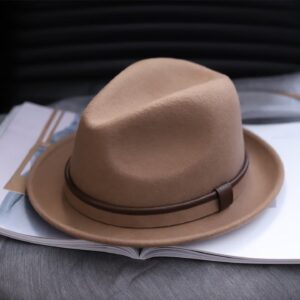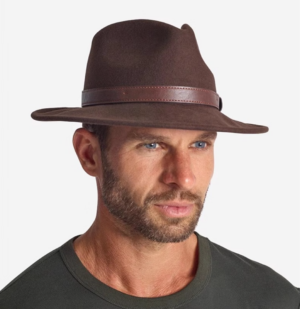
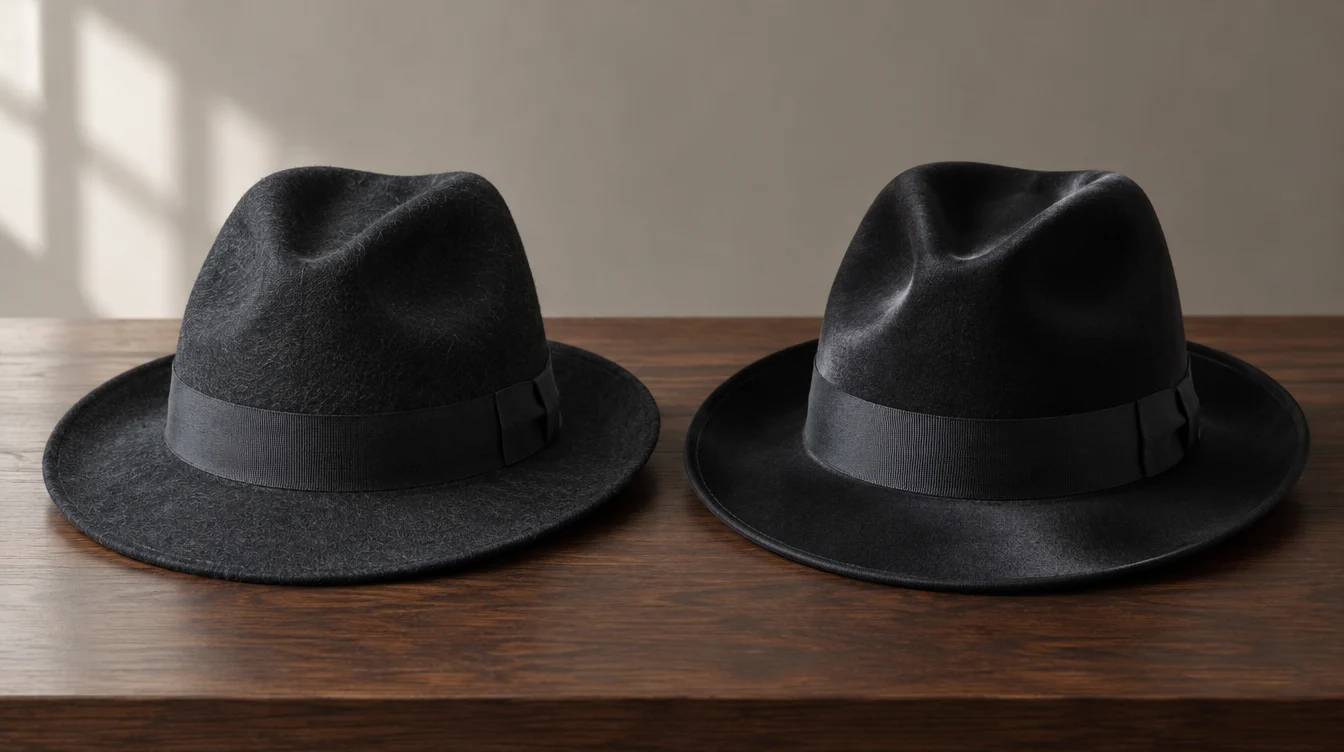
Short answer: fur felt (usually rabbit, hare or beaver) makes a denser, smoother, lighter fedora that sheds light rain and holds its shape for years. Wool felt costs much less and looks sharp on day one, but it is coarser to the touch, absorbs water more readily and is more likely to sag or lose its crease over time.
If you want an everyday or occasional hat on a budget, wool felt is a sensible choice. If you want one black fedora to wear often and keep for a long time, fur felt is usually the better long-term buy.
Wool Felt vs Fur Felt at a Glance
| Feature | Wool felt | Fur felt |
|---|---|---|
| Fiber | Sheep’s wool | Animal underfur, most often rabbit, hare or beaver, sometimes blended |
| Surface | Matte, slightly fibrous, can look a little fuzzy up close | Smooth and tight, with a soft natural sheen |
| Weight | Usually heavier for the same stiffness | Lighter, because the felt is denser and can be thinner |
| Light rain | Absorbs water; can soften and droop if soaked | Water tends to bead and roll off a well-made body |
| Shape retention | Brims and creases can relax over time | Holds a crease and brim snap well; can be steamed and reshaped |
| Price | Entry-level to mid-range | Mid-range to premium; beaver content raises the price most |
| Best for | Casual wear, first fedora, occasional use, travel | Frequent wear, dress hats, long-term ownership |
Why Two “Felts” Behave So Differently
Felt is not woven. Fibers are matted together with heat, moisture and pressure until they lock into a solid sheet, which is then shaped into a hat body. Both wool and fur felt are made this way, so the difference comes down to the fiber itself.
Wool fibers are thicker and springier. They felt well, but the finished material stays relatively open and lofty, which is why wool felt feels warm and soft yet slightly coarse. Fur used for hatting comes from the fine underfur of the animal. Those fibers are much finer and interlock very tightly, producing a felt that is denser and more compact. That density is what gives fur felt its smooth finish, lighter weight, water resistance and ability to keep a shape.
How Each Looks on a Black Fedora
Color makes the material difference easier to see. On a black fedora, fur felt tends to show a deep, even black with a subtle sheen that catches the light along the crown and brim edge. It can be finished in different ways, from a smooth, sanded surface to a velvety velour or a soft suede-like nap.
Black wool felt reads more matte. That is not a flaw; it looks clean and works very well with casual outfits, wool coats and knitwear. The trade-off is that dark wool shows lint, dust and surface fuzz more readily, and with heavy wear the surface can start to look a little tired around the brim edge and where you pinch the crown.
If you are still deciding on crown height and brim width, our guide to choosing a black fedora by fit and brim covers the shape side of the decision.
Weather: Rain, Cold and Heat
Rain
This is the biggest practical difference. A good fur felt fedora can handle a light shower: water tends to sit on the surface and roll off. Wool felt takes on water more easily. A brief drizzle is fine, but a soaking can soften the brim and crown so they drop or warp as they dry.
Whichever material you own, if the hat gets wet, shake off excess water, let it air dry at room temperature on a hat stand or resting on its crown, and keep it away from radiators, heaters and hair dryers. Direct heat can shrink or distort felt.
Cold
Both are autumn and winter materials. Wool felt is often thicker and feels cozy. Fur felt is warm for its weight, and its wind resistance makes it comfortable on cold, breezy days without feeling heavy.
Warm weather
Neither is a true summer hat. A lighter fur felt is more comfortable on mild spring days than a thick wool felt, but for real heat a straw fedora is the better tool.
Shape, Durability and Lifespan
Wool felt can look crisp when new, yet its looser structure makes it more prone to relaxing. Over months of regular wear, brims may start to ripple or flatten, and pinches in the crown can soften. Some wool fedoras are deliberately made soft and “crushable” for packing, which is useful for travel but means less structure.
Fur felt holds a crease and brim shape better and recovers more readily if it is knocked out of line. Because it can be steamed and reshaped many times, a quality fur felt hat can stay in rotation for years with basic care. That is the main reason it costs more and why many wearers consider it better value over time.
Stiffness also affects how a hat fits on your head. Our article on how hat stiffness affects fit explains why a softer body can feel more forgiving than a firm one.
Comfort and Weight
For the same structure, fur felt is usually lighter on the head, which matters if you wear a fedora for a full day. Wool felt can feel slightly heavier and warmer, and people with sensitive skin sometimes find wool scratchy where the brim edge or exposed felt touches the forehead. A good sweatband reduces this on either material.
A Note on Fur Types and Grades
“Fur felt” covers a range. Rabbit fur felt is the most common. Hare is generally considered a step up in density, and beaver sits at the top of the range in price and reputation. Many hats use blends.
Some makers rate their felts with “X” marks, but there is no industry-wide standard, so a 10X from one brand cannot be compared with a 10X from another. Look for the stated fiber content (for example, “100% rabbit fur felt” or the percentage of beaver) rather than relying on X counts.
How to Tell Wool Felt from Fur Felt When Shopping
- Read the fiber content. “100% wool” means wool felt. Fur felt is normally named as such, often with the animal. “Wool blend” can include synthetic fibers, so check the full composition.
- Check the price. Fur felt is consistently more expensive to produce. A fedora described as fur felt at a wool felt price deserves a closer look at the listing.
- Feel the surface. Fur felt feels smooth and silky; wool felt feels drier and slightly coarse, with fibers you can sometimes see standing up.
- Feel the weight and brim. In hand, fur felt usually feels lighter, and the brim has a firmer, springier response when gently flexed.
- Ask the seller. A reputable shop can tell you the fiber and the finish.
For a broader overview of straw, leather, cotton and felt options side by side, see our fedora buying guide.
Which Should You Buy?
Choose wool felt if
- This is your first fedora and you want to try the look
- You will wear it occasionally or seasonally
- You want a soft, packable hat for travel
- Budget matters more than lifespan
- You prefer a matte, casual finish
Choose fur felt if
- You plan to wear it several times a week
- You want a dress hat that keeps a sharp crease
- You often get caught in light rain
- You value a lighter hat for all-day wear
- You would rather buy once and keep it for years
If wool is the right fit for now, our Australian superfine wool fedora is one option to consider; check the product page for its exact specifications and sizing.
Care Differences Worth Knowing
- Brushing: use a soft hat brush on both. Brush gently around the hat in one direction to lift dust without roughing the surface.
- Lint: black wool felt picks up lint easily. A light pass with a lint roller is usually fine on wool; on fur felt, especially velour finishes, a brush is safer.
- Handling: pick the hat up by the brim, not the crown pinch. Repeated pinching wears wool felt faster.
- Storage: keep it in a hat box or rest it upside down on its crown so the brim does not flatten. Avoid hot cars and damp cupboards.
- Reshaping: both can be gently steamed, but fur felt responds more predictably. If a wool brim has gone wavy, steam lightly and let it cool on a flat surface.
Sourcing and Ethics
Both materials come from animals, so neither is vegan. Wool is shorn from sheep; fur felt uses animal fur. Sourcing practices vary from maker to maker, so if this is important to you, ask the seller where the fiber comes from. If you want to avoid animal fibers entirely, look for synthetic felt and check the composition, keeping in mind it will not perform like fur felt in rain or over time.
The bottom line: wool felt is the affordable, easy entry into the fedora look, while fur felt is the material to choose when you want a black fedora that stays sharp, handles weather and lasts.