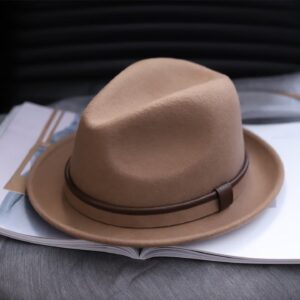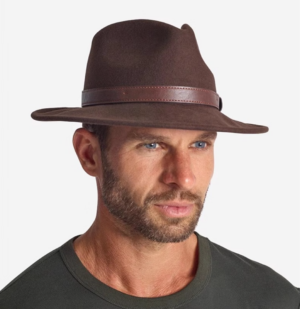
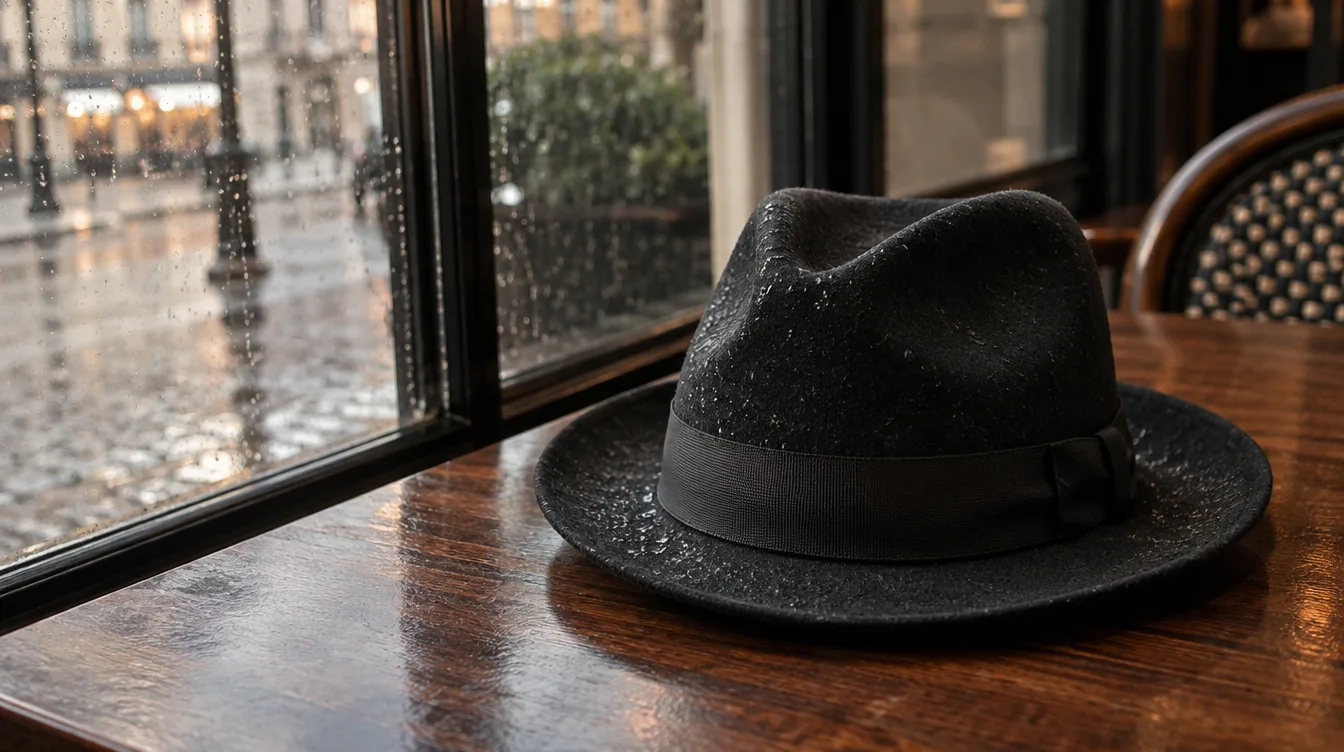
You’re heading out in your favorite wool fedora when the first drops of rain start falling. Do you need to take it off immediately, or can you keep wearing it?
The short answer: Yes, you can wear a wool fedora in light rain, but most ordinary wool felt fedoras are not waterproof. A brief drizzle is unlikely to cause serious problems if you dry the hat properly. Prolonged or heavy rain, however, can saturate the felt, affect its shape, and potentially change how it fits.
The important distinction is between a fashion fedora made from ordinary wool felt and a hat specifically designed for wet-weather use.
Understanding that difference can save you from a drooping brim, a misshapen crown, or an unexpectedly tight hat after it dries.
Are Wool Fedora Hats Waterproof?
Wool has some natural resistance to water, but water-resistant and waterproof mean very different things.
Wool fibers have an outer surface that can resist moisture to a degree. When wool is compressed into felt, the densely interlocked fibers can also slow the passage of water.
That is why a few raindrops may sit on the surface of a wool fedora before the material becomes noticeably wet.
However, this protection is limited. As exposure continues, moisture can enter the felt. Rain performance also depends on the density of the material, the hat’s construction, any applied water-repellent treatment, and the condition of the hat.
Some manufacturers produce wool felt hats specifically for outdoor wear and label them water-repellent or weather-resistant. Those claims apply to the particular models, not automatically to every hat made from wool.
If your fedora’s product description says only “100% wool,” you should not assume it is waterproof.
How Much Rain Can a Wool Fedora Handle?
There is no universal time limit for safely wearing a wool fedora in the rain. A thick, treated outdoor hat may perform quite differently from a lightweight fashion fedora.
The following guide is a practical way to assess the risk when your hat has no specific rain-resistance rating.
| Weather | Risk to Ordinary Wool Felt | What to Do |
|---|---|---|
| Light drizzle | Usually low with brief exposure | Continue briefly if necessary, then dry naturally. |
| Steady rain | Increasing risk as the felt absorbs moisture | Seek shelter or use an umbrella. |
| Heavy downpour | Higher risk of saturation and shape changes | Avoid prolonged exposure. |
| Repeated wetting | Greater wear and potential shape problems | Choose a hat designed for wet weather. |
Pay attention to the hat rather than the clock. If the brim starts feeling soft, the crown loses definition, or the felt becomes noticeably heavy with moisture, it is time to get the hat out of the rain.
What Happens If a Wool Fedora Gets Wet?
Getting caught in the rain does not automatically ruin a wool fedora. The outcome depends on how wet it becomes, how it was made, and what happens during drying.
1. The brim may lose its shape
A fedora’s brim is one of its defining features. Some brims are designed to curve gently downward, while others have a crisp edge or carefully shaped snap brim.
When the felt absorbs enough moisture, it can become softer and less able to hold its original form. A previously neat brim may begin to droop, curl unevenly, or settle into an unwanted shape as it dries.
Not every hat reacts this way. Stiffer construction and suitable finishes may help a hat maintain its profile.
2. The crown can lose definition
The center dent, pinch front, or teardrop crown of a fedora is deliberately shaped during manufacturing.
Excessive moisture can make that shape less stable. If the crown is squeezed, packed, or pressed against another object while damp, unwanted creases may remain after drying.
This is one reason to handle a wet fedora gently and avoid repeatedly pinching its crown.
3. Shrinkage and fit changes are possible
Wool felt can change dimensions under unfavorable wetting, heat, and handling conditions. Heat is a particular concern because it can contribute to further felting and shrinkage.
Leather sweatbands can also shrink when exposed to excessive heat while damp.
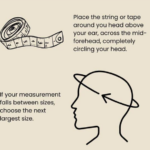
Even a relatively small change in size may make a previously comfortable fedora feel tight around your forehead.
If your hat no longer fits comfortably after drying, don’t try to force it onto your head. A professional hatter may be able to assess whether it can be resized or reblocked.
For general fit advice, see our fedora hat sizing guide.
4. Water marks or uneven color may appear
Some felt hats develop visible marks after getting wet. These can result from uneven drying, surface finishes, dirt carried by rainwater, or variations in dyes and construction.
On a black fedora, such marks may be less noticeable than on a lighter hat, but black felt is not immune to spotting or changes in appearance.
Avoid scrubbing damp felt to remove a mark. Let the hat dry completely before deciding whether cleaning is necessary.
How to Dry a Wet Wool Fedora Without Ruining It
If your fedora gets caught in the rain, the way you dry it matters more than trying to remove every drop of water immediately.
- Get out of the rain. Once you’re indoors, remove the hat and check how wet the felt and sweatband have become.
- Gently shake off excess water. Hold the hat securely without squeezing its crown or bending the brim. A gentle shake can remove loose droplets.
- Blot, don’t rub. If necessary, lightly touch excess surface moisture with a clean, absorbent cloth. Do not scrub the wet felt or press hard enough to alter its shape.
- Support the hat properly. Place it on a suitable hat stand or clean support that keeps its weight off the brim. Some manufacturers recommend resting their hats upside down on the crown. Follow your hat’s own care instructions when available.
- Let it air-dry at room temperature. Choose a ventilated indoor space away from radiators, fireplaces, heaters, hair dryers, and direct intense sunlight.
- Check the shape without forcing it. If the hat is slightly misshapen, avoid aggressive reshaping while the felt is wet. More substantial distortion is best handled by a professional.
- Wait until it is completely dry. Before returning the hat to storage, check the felt, lining, and sweatband for remaining moisture.
Important: Never try to speed up drying with a hair dryer or radiator. Direct heat can cause shrinkage or distortion and may damage parts of the sweatband. Gentle, natural drying is the safer approach.
If your hat is soaked all the way through, be particularly careful. Keep it supported in its intended shape while it dries, and do not store it in a closed box or plastic bag while damp.
Is Fur Felt Better Than Wool Felt for Rain?
Generally, high-quality fur felt is a more suitable choice than ordinary wool felt if you regularly wear a structured fedora outdoors in wet weather.
Fur felt is typically made from rabbit, hare, beaver, or blends of animal fur. Quality fur felt hats can offer good resilience and may tolerate repeated exposure to rain better than many fashion-oriented wool felt hats.
However, the material name alone does not guarantee weather performance. Felt density, finishing, shaping, and any protective treatment are important too.
| Feature | Wool Felt Fedora | Quality Fur Felt Fedora |
|---|---|---|
| Light rain | Usually tolerable briefly | Often handles it well |
| Prolonged rain | Not recommended unless rated for it | Generally more suitable, depending on construction |
| Shape retention | Varies with construction and finish | Often better in quality examples |
| Waterproof by default? | No | No |
| Typical use | Everyday and dress wear | Dress wear and, in suitable designs, outdoor use |
If you’re choosing between materials, start with how you actually plan to wear the hat. Someone dressing for occasional city outings may have no need for a specialized rain-resistant hat.
Our guide to choosing a black fedora explains how felt type, brim width, crown shape, and fit affect the overall choice.
Can You Make a Wool Fedora More Water-Resistant?
Some hat owners consider using a water-repellent spray to protect their wool felt from unexpected showers.
That may be an option for certain hats, but it is not something to apply indiscriminately.
Water-repellent products can vary in their suitability for felt. An incompatible treatment may alter the finish, produce visible marks, affect the texture, or interfere with the hat’s existing treatment.
Before considering any spray:
- Read the manufacturer’s care instructions for your particular fedora.
- Use only a product specifically approved for that hat material and finish.
- Follow the product’s application and ventilation instructions.
- Test on a small, inconspicuous area if the manufacturer permits it.
- Do not assume that applying a spray makes the hat waterproof.
For an expensive, vintage, or delicate fedora, consulting a professional hatter is a safer choice than experimenting with an unfamiliar treatment.
If regular exposure to rain is unavoidable, purchasing a hat explicitly designed for wet weather is generally more practical than trying to convert an ordinary dress fedora into one.
What About Wearing a Black Wool Fedora in the Rain?
Black wool fedoras are popular for autumn and winter outfits, when rain is often part of the day’s forecast.
The color does not fundamentally change how the wool fibers respond to moisture. A black fedora can still absorb water, soften, or lose its shape.
Black may conceal some minor marks, but it does not provide additional waterproofing.
For occasional outings, an ordinary black wool fedora can be a sensible wardrobe choice as long as you are prepared to protect it during heavier rain.
For example, our Men’s Wool Fedora Hat is a wool option for classic styling. Its material description should not be interpreted as a guarantee of rain resistance.
The same principle applies to our Australian Superfine Wool Fedora Hat. Fine wool describes its material, not a verified waterproof rating.
If wet-weather performance is important to you, look for explicit manufacturer guidance rather than relying on material or appearance alone.
Should You Wear Your Fedora If Rain Is Forecast?
It depends on how much time you expect to spend outdoors and whether you can keep the hat protected.
If you’re walking a short distance between buildings and only light drizzle is expected, wearing your wool fedora may be perfectly reasonable.
If you’re attending an outdoor event, traveling without an umbrella, or spending hours outside in unpredictable weather, an untreated fashion fedora is not the ideal choice.
A useful approach is to consider three things before leaving:
- Rain intensity: Is it a passing drizzle or sustained rainfall?
- Hat construction: Is the fedora intended for everyday fashion or outdoor weather exposure?
- Protection: Can you use an umbrella or move indoors if conditions deteriorate?
A wool fedora does not need to be treated as a fragile accessory, but it should not be mistaken for purpose-built rain gear.
What If Your Fedora Has Already Lost Its Shape?
If a wool fedora has dried with a drooping brim, distorted crown, or noticeably smaller fit, resist the temptation to soak it again or apply strong steam and heat without experience.
Some minor shape issues may be correctable, but the appropriate method depends on the felt, stiffeners, lining, and construction.
Professional hatters use suitable shaping forms and controlled techniques to restore hats when possible. More severe shrinkage or distortion may not be fully reversible.
If your fedora has sentimental or significant monetary value, having it inspected is preferable to risking further damage with a home repair.
The Bottom Line
You can wear a wool fedora in the rain, but how much rain it can handle depends on the hat. A short encounter with light drizzle is usually manageable for a well-made wool felt fedora. Sustained rainfall is a different matter, especially when the hat is not designed or treated for wet weather.
When the hat gets wet, remove excess moisture gently, support its shape, and allow it to dry naturally away from heat.
And if you expect to spend a lot of time outdoors in the rain, look for a hat with clearly stated weather-resistant construction rather than assuming all wool felt performs the same way.
That way, you can enjoy the classic look of a fedora without taking unnecessary chances with the shape and fit that made you choose it in the first place.