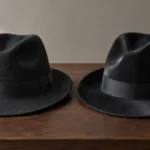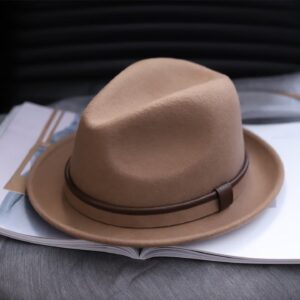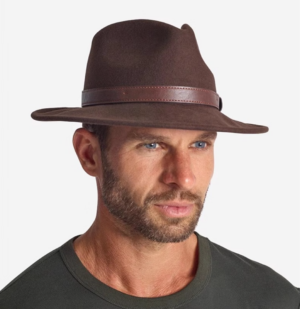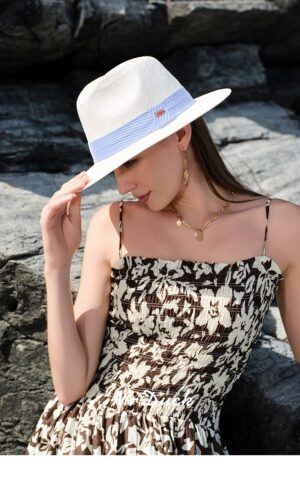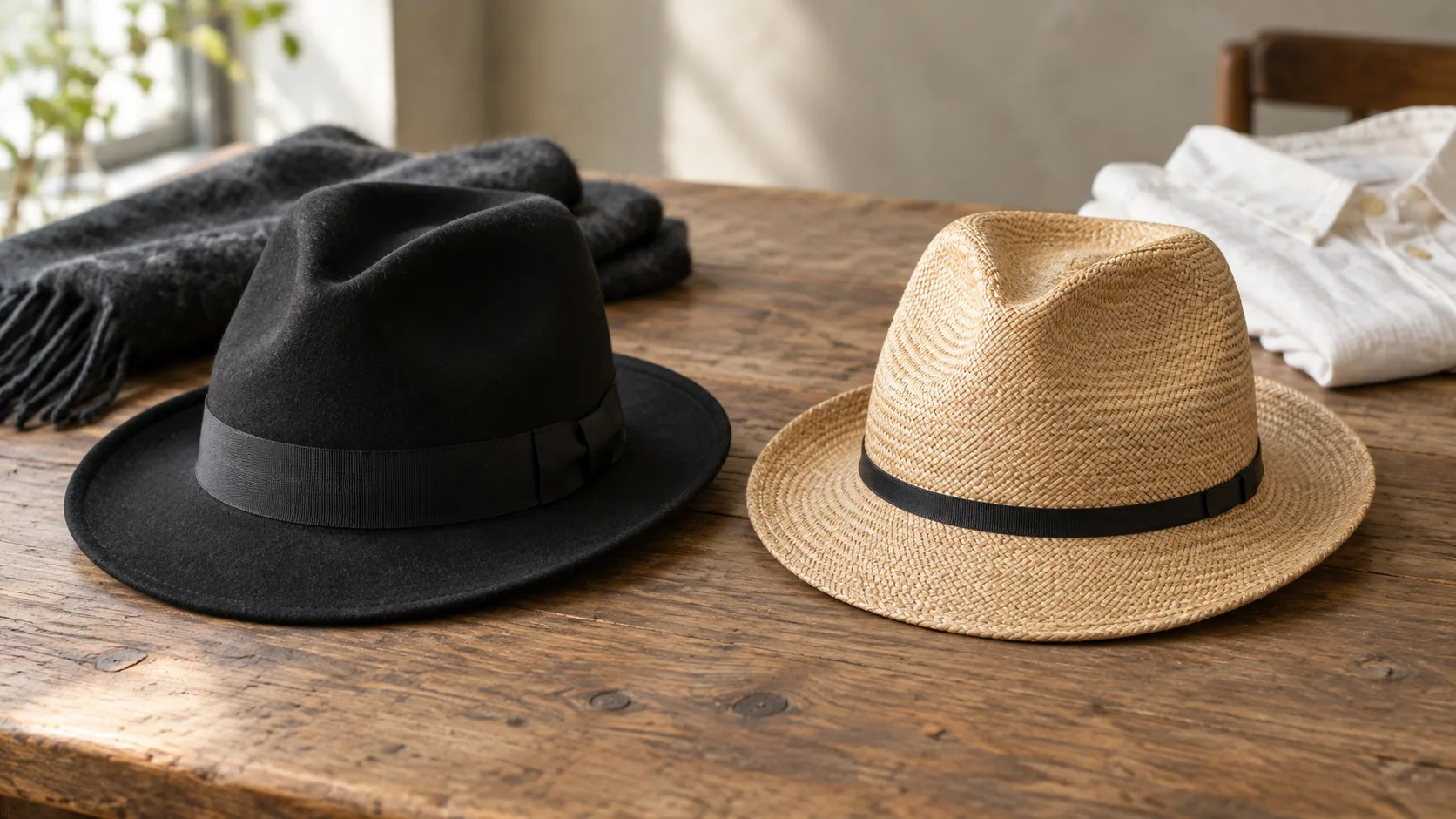
Short answer: choose a felt fedora if you want one hat for autumn, winter and cool spring days, a crisper shape, and better tolerance for a light shower. Choose a straw fedora if you need a hat for heat, strong sun and long days outdoors, where airflow matters more than structure. If you can only buy one and you live somewhere with real seasons, felt is usually the more versatile first hat. If you live somewhere warm most of the year, straw may get far more wear.
Felt and straw fedoras can share the same silhouette, a pinched crown, a grosgrain band and a snap brim, yet they behave like two different hats. One is a dense, shaped fabric made to hold a crease and block wind. The other is a woven, open material made to let heat escape. Picking between them is less about which is “better” and more about where, when and how you will actually wear it.
This guide compares the two side by side, explains what the labels really mean, and gives you a simple way to decide.
Felt vs Straw Fedora at a Glance
| Factor | Felt fedora | Straw fedora |
|---|---|---|
| Best season | Autumn, winter, cool spring evenings | Late spring and summer, hot or humid climates |
| Breathability | Low; it holds warmth around the head | High; the weave lets heat escape |
| Structure | Holds a sharp crease and a defined brim snap | Lighter and crisper; shape depends on weave and finish |
| Light rain | Generally copes with a brief shower, especially good fur felt | Best kept dry; moisture can soften, warp or loosen many straws |
| Formality | Easier to dress up with coats and tailoring | Reads relaxed to smart-casual; finer weaves dress up well in summer |
| Typical weak points | Heat, crushing, sitting in damp storage | Cracking at the pinch, water, dryness, being squashed in luggage |
| Black colour | Deep, matte, very easy to wear year-round | Striking but more unusual; a dark straw can feel warmer in direct sun than a light one |
What “Felt” Actually Means on a Fedora
Felt is not woven. Fibres are matted together with moisture, heat and pressure until they form a dense, flexible sheet that can be blocked into a crown and brim. That construction is why felt takes a pinch so well and why it keeps wind off your head.
Wool felt
Wool felt is the most common and most accessible option. It gives the classic fedora look, feels soft, and is a practical everyday choice. Quality varies widely: denser, finer wool felt keeps its shape better, while thin or loosely finished felt can lose its brim line over time. Some wool felts are stiffened to help them hold shape.
Fur felt
Fur felt, typically rabbit or beaver, or a blend, is the traditional premium choice. It usually has a smoother, finer surface, can feel lighter for its stiffness, and tends to shrug off light moisture better than average wool felt. It also usually costs more. For a dress hat you plan to keep for years, it is worth considering.
If you are still deciding between wool and fur felt for a black hat, our guide on how to choose a black fedora goes deeper into material, brim width and proportion.
What “Straw” Actually Means on a Fedora
“Straw” is a broad label that covers natural plant fibres, paper-based yarns and synthetic braids. They look similar in photos but feel and age very differently.
- Toquilla straw (genuine Panama): woven by hand in Ecuador from the toquilla palm. The traditional weaving craft is recognised on UNESCO’s list of Intangible Cultural Heritage. Finer, tighter weaves take longer to make and generally cost more.
- Paper straw (often sold as toyo or shantung): made from twisted paper yarn. Light, affordable and smooth, but usually more sensitive to water than natural straw.
- Raffia, palm and seagrass: natural fibres with a more textured, casual look. Good for beach and holiday wear.
- Synthetic braids: polyester or similar blends that copy the look of straw. Often easier to keep clean, but they do not always breathe as freely as natural fibres.
Weave matters as much as fibre. A tight, even weave looks more refined and blocks more light; an open weave feels cooler but lets more sun through.
Choose by Season and Climate
The old idea that straw is only for “summer months” is a custom, not a rule. Your local weather is a better guide than the calendar.
Felt makes more sense when
- You regularly see cool mornings, wind or drizzle
- You mainly wear coats, knitwear or jackets
- You want one hat for most of the year
- You commute or walk in mixed city weather
Straw makes more sense when
- Daytime heat is your main problem
- You spend long hours outdoors in sun
- You travel to warm destinations
- Your wardrobe is linen, cotton and short sleeves
In between seasons, a lighter-weight felt or a darker, tighter straw can bridge the gap. Many hat wearers simply keep one of each and switch when the weather clearly turns.
Choose by Outfit and Occasion
Match the weight of the hat to the weight of the outfit. That single rule prevents most mismatches.
Felt pairs naturally with wool overcoats, tweed and flannel, leather or suede jackets, chunky knits, dark denim and boots. A black felt fedora is also the easier choice for evening events, funerals, winter weddings and anything where a coat is part of the outfit.
Straw pairs naturally with linen shirts and suits, cotton chinos, polo shirts, light dresses, loafers and sandals. A finely woven Panama can look sharp with a summer suit, while raffia or open weaves lean toward holidays and weekends. For ideas, see our black fedora summer outfit guide.
The most common mistake is the reverse pairing: a heavy felt fedora with shorts and a T-shirt in high heat, or a light straw with a thick winter overcoat. Both look off because the textures disagree.
Durability, Weather and Care
Caring for a felt fedora
- Brush regularly with a soft hat brush, following the direction of the nap.
- If it gets wet, shake off the water, reshape gently and let it dry naturally at room temperature, away from radiators and hair dryers.
- Rest it upside down on its crown or on a hat stand so the brim does not flatten.
- Store it somewhere dry and ventilated; a damp cupboard is harder on felt than occasional rain.
Caring for a straw fedora
- Pick it up by the brim, not the front pinch. Repeated pressure at the pinch is a common place for straw to crack.
- Keep it out of rain where possible, and never soak it to clean it.
- Wipe marks with a barely damp cloth and let it air dry away from direct heat.
- Avoid crushing it in a suitcase unless the product is specifically made to be packable; a hat box or wearing it in transit is safer.
Neither material enjoys being left in a hot car, sat on or stuffed into a bag. With reasonable care, a good felt or a well-made straw can last many seasons.
Fit and Comfort Differences
Felt can ease very slightly with wear, while straw has little to no give. That means sizing is less forgiving with straw: if a straw fedora feels tight in the shop, it will probably stay tight. Comfort also depends on the sweatband, which matters more in a straw hat you will wear on hot days.
Before you buy either, measure your head properly using our guide on how to choose the right fedora hat size.
Sun Protection: What Actually Helps
Both materials give shade, but the brim does most of the work. A wider brim shades more of the face, ears and neck than a narrow stingy brim, whatever it is made of. With straw, a tighter weave lets less light through than an open one. For long hours in strong sun, a hat is one part of sun protection, not a replacement for sunscreen and shade.
If You Can Only Buy One
For most people in climates with distinct seasons, a black wool or fur felt fedora with a medium brim is the safer first purchase. It covers the most months, works with the widest range of outfits, and handles the occasional shower. A structured option like our superfine wool fedora is an example of that cooler-weather style.
If you live somewhere hot for most of the year, or you want a hat specifically for summer and travel, start with straw instead. A lightweight woven option such as our handwoven Panama straw fedora is built for warm-weather wear.
Quick Decision Checklist
- When will you wear it most? Cool months point to felt; hot months point to straw.
- What will you wear it with? Coats and knitwear suggest felt; linen and cotton suggest straw.
- How often will it get wet? Frequent drizzle favours felt.
- How do you travel? If it must go in a bag, look for a hat sold as packable, or be prepared to wear or box it.
- Do you want one hat or a rotation? One hat usually means felt; a two-hat rotation means one of each.
Frequently Asked Questions
Can you wear a felt fedora in summer?
You can on mild days, cool evenings or in air-conditioned settings, but in real heat a felt fedora traps warmth and can become uncomfortable quickly. Straw is the more practical choice for hot afternoons.
Can you wear a straw fedora in autumn?
On warm early-autumn days, yes. Darker or tighter-woven straws look more natural with transitional outfits than very pale, open weaves. Once coats come out, felt usually looks more consistent.
Is a Panama hat the same as a straw fedora?
A genuine Panama hat is made from toquilla straw woven in Ecuador, and it is often shaped as a fedora. But not every straw fedora is a Panama; many are made from paper straw, raffia or synthetic braid.
Which lasts longer, felt or straw?
It depends more on quality and care than on the material category. Good felt is generally more forgiving of everyday handling and light rain, while straw needs more care around water and the pinch. A cheap example of either will wear out faster than a well-made one.
The right choice is the one that matches your weather and your wardrobe. Felt gives you structure and range across the cooler months; straw gives you comfort when the heat arrives. Many fedora wearers end up owning both.